
Each year, we step back and look across the hundreds of coaching conversations we have with senior executives and leadership teams around the world. These leaders span industries, cultures, and geographies, yet they are navigating strikingly similar tensions.
The themes below are not predictions drawn from theory. They reflect what we are seeing and hearing in real time as we coach the top 10% of executives globally: leaders grappling with AI acceleration, geopolitical uncertainty, economic volatility, and profound shifts in how work gets done.
To invite reflection rather than prescription, each theme closes with a short question for a moment to pause and consider what this might mean for your own leadership.
1. The Rise of the Deeply Human Leader in an AI-Powered World

UK-based coach Nadine Slater is seeing global leaders place renewed emphasis on the human foundations of leadership. As AI becomes more embedded in daily work, these leaders are moving beyond performance management toward intentionally creating environments where people can adapt, learn, recover, and do meaningful work. Trust, psychological safety, ethical judgment, and presence are becoming differentiators, not “nice to haves.”

From Hong Kong, Catherine Eidens invites leaders to reflect on what tools like ChatGPT get right – not in their answers, but in how safe people feel thinking out loud with them. Increasingly, the best future-fit leaders are experimenting with the same stance: listening without judgment, allowing ideas to be unfinished, and creating spaces where thinking can evolve collaboratively.
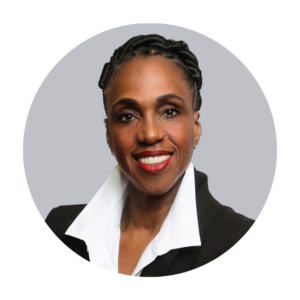
Janet Miller Evans, based in the San Francisco Bay Area, notices leaders integrating artificial intelligence with emotional intelligence rather than treating them as trade-offs. AI provides speed and insight; leaders provide discernment, empathy, and context. With burnout still widespread, the goal is not to automate leadership, but to free up space for the most human work: connection, trust, and meaning.
Food for thought: What are you deliberately strengthening in your leadership style in 2026 that AI will never replace?
2. Motion Is the Antidote to Fear

In her coaching with C-suite leaders, UK-based Julie Stokes observes a clear pattern: fear thrives when uncertainty is paired with inaction. The leaders who steady their organizations are not those offering reassurance, but those choosing thoughtful motion.
Rather than avoiding difficult conversations, they name risks openly and move forward with intent. Their optimism has depth; it’s grounded, realistic, and forward-looking. In uncertain environments, motion itself becomes a signal of leadership.
Food for thought: What is one move that could shift your team from worry to forward motion?
3. Simplicity and Laser-Sharp Prioritization

From an Asian vantage point, Rainer B Schmitz highlights simplicity as one of the most underappreciated leadership capabilities. As complexity increases, leaders who can distill direction into a clear narrative and a small set of priorities create a disproportionate impact.
This kind of simplicity demands depth: connecting dots, making hard trade-offs, and communicating with discipline. Where leaders simplify well, teams regain focus, confusion drops, and trust grows.
Food for thought: What would become clearer for your team if you reduced your priorities by one?
4. Redefining Alliances in a World That Breaks Them
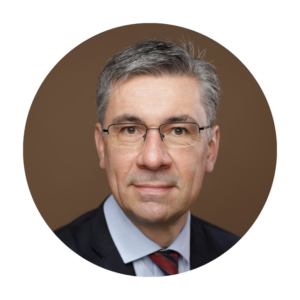
With his European lens, Roland Unfried notices senior leaders revisiting long-held assumptions about trust. Alliances – geopolitical, organizational, and interpersonal – are shifting faster than expected, prompting leaders to ask uncomfortable questions.
Who can I really rely on now? How do I remain trustworthy under pressure? What values must we actively live in, not just state? Leadership in 2026 requires a more intentional approach to alliances, grounded in credibility, consistency, and choice.
Food for thought: Which of your relationships or alliances deserve more intentional attention this year?
5. Resilience as a Foundational Leadership Capability
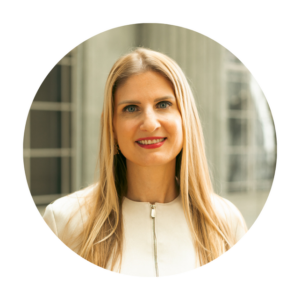
From Singapore, Eileen Coupin sees resilience evolving from a personal coping skill into a core leadership discipline. Leaders are recognizing that resilience is not about endless endurance, but about staying grounded, regulating energy, and maintaining clarity amid ongoing volatility.

In the US, Vanessa Tennyson observes how global uncertainty and relentless pressure have pushed many teams beyond their limits. The leaders making a difference acknowledge exhaustion without letting it define the future helping people reconnect to perspective, possibility, and momentum. Resilience, increasingly, is something leaders need to model and enable.
Food for thought: What does your team learn about resilience by watching how you handle pressure?
6. Active Listening as a Leadership Superpower During Uncertainty
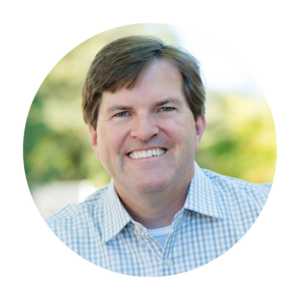
San Francisco Bay Area-based Michael O’Reilly notices that uncertainty is no longer just strategic, it is deeply personal. As AI acceleration and economic shifts challenge identities and assumptions, leaders are finding traction not by speaking more, but by listening better.
Slowing down conversations, resisting the urge to fix, and helping teams focus on what they can influence are restoring trust and focus. In an environment of constant noise, listening has become one of the most powerful leadership moves available.
Food for thought: When was the last time you listened to a challenge without trying to solve it?
7. A New Definition of Executive Presence

From New York, Brian McKeon sees organizations moving away from narrow, appearance-based notions of executive presence. Instead, presence is being redefined as impact: the ability to remain calm, clear, and intentional under pressure.
This shift makes presence more actionable and more inclusive, grounded in observable behaviors such as clarity of communication, emotional intelligence, strategic thinking, and influence. The bar remains high, but the definition becomes far more relevant.
Food for thought: How would your executive presence change if it were measured by impact, not style?
8. Designing the Talent Blueprint for the Next Decade

Asia-based Diana Gan points to a once-in-a-generation disruption in how organizations build and sustain leadership capability. Across her work with global leaders, she sees a growing gap between how fast work is changing and how slowly talent systems are being redesigned. Shifting career expectations, accelerating retirements, and the rapid introduction of AI are colliding with economic uncertainty and repeated restructuring – often without sufficient attention to long-term capability and knowledge transfer.
What differentiates forward-looking leaders is not whether they recognize these forces, but whether they act on them. Diana sees leaders making deliberate choices to redesign workflows, capture critical institutional know-how, and develop judgment and intuition in next-generation leaders, not just skills. The risk of inaction is a leadership vacuum within a few years; the opportunity is to intentionally design a talent blueprint that ensures continuity and resilience beyond the next cycle.
Food for thought: What capability would your organization struggle most to replace if it walked out the door tomorrow?
9. Attitude as a Leadership Multiplier

From her work with global leaders in the US, Ana Lapera reminds us that while leaders cannot control everything, they can control how they show up. Attitude – how leaders interpret events and regulate themselves – shapes the emotional climate around them.
Leaders who invest in personal practices that help them reset and reconnect create ripple effects across their organizations. In uncertain times, attitude becomes contagious and quietly powerful.
Food for thought: What emotional tone are you setting before you say a single word?
A Closing Reflection
Leadership in 2026 will reward clarity over certainty, intention over intensity, and humanity over polish. The questions woven through this article are not prompts to act faster, but invitations to think more deliberately. If even one of them gives you pause, it may be worth sitting with it a little longer. In our experience, leaders who create that space tend to lead with greater steadiness and create it around them.
In times of complexity and pace, leaders benefit most from a confidential thinking partner – someone who creates space for clarity, challenge, and decisive action.
Luciana Nuñez, co-author of COACHING POWER, is Head of Americas and Partner at The Preston Associates. She is an accomplished executive coach and former CEO with more than 20 years of leadership experience at Fortune 500 companies, including Bayer, Danone, and Roche. She blends her strategic expertise with a passion for coaching, serving as a board member, investor, and advisor to entrepreneurs and executives worldwide.
To receive more expert articles from our coaches on a monthly basis you can register to TPA’s Leadership Digest here